
Managing money is not just about saving or investing. It is about being prepared for the unexpected. If you are wondering how to build an emergency fund in India, you are already taking the right step toward financial security.
Life does not give warnings before problems arrive. A sudden medical bill, job loss, or urgent repair can disturb your entire financial plan.
If you are someone who is already exploring topics like budgeting, saving, or investing, then you might have come across the concept of an emergency fund. You can also read our detailed guide on budgeting strategies to understand how to manage your monthly income better.
An emergency fund is your financial backup. It helps you stay calm during tough situations. Without it, you may end up using credit cards or loans, which can lead to debt.
In this complete 2026 guide, you will learn how to build an emergency fund in India step by step, where to keep it, how much to save, and common mistakes to avoid.
What is an Emergency Fund?
An emergency fund is money that you keep aside only for unexpected situations. It is not for shopping, travel, or gadgets. It is only for real emergencies.
These emergencies include:
- Medical issues
- Job loss
- Urgent home repairs
- Family emergencies
- Sudden income loss
Think of it as your financial safety net. It protects you when life becomes unpredictable.
Why Emergency Fund is Important in India (2026 Reality)
In 2026, financial uncertainty is higher than ever. Job markets are changing, inflation is rising, and expenses are increasing every year.
Many people in India still live paycheck to paycheck. This means even a small emergency can disturb their financial stability.
Without an emergency fund, people usually:
- Use credit cards
- Take personal loans
- Borrow from friends or family
- Break long-term investments
All these options can create financial stress.
An emergency fund gives you peace of mind. It allows you to handle situations without panic.
How Much Emergency Fund Should You Have?
The most common rule is the 3-6-12 rule.
- 3 months of expenses – if you are single with stable income
- 6 months of expenses – if you have family or dependents
- 12 months of expenses – if you are self-employed or freelancer
Example Calculation
| Monthly Expenses | Emergency Fund (6 months) |
|---|---|
| ₹20,000 | ₹1,20,000 |
| ₹30,000 | ₹1,80,000 |
| ₹50,000 | ₹3,00,000 |
You should calculate only essential expenses like:
- Rent or EMI
- Groceries
- Electricity and bills
- Insurance
- Transportation
Avoid including luxury or optional spending.
Emergency Fund vs Savings vs Investment
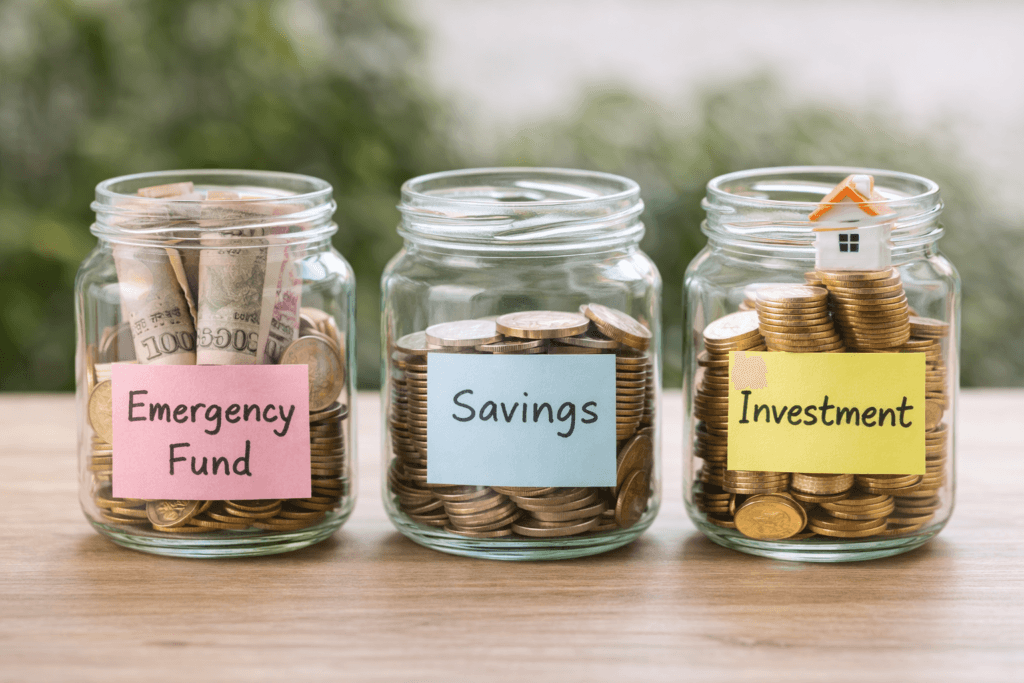
Many people confuse emergency fund with savings or investments.
Here is the simple difference:
| Type | Purpose | Risk | Liquidity |
|---|---|---|---|
| Emergency Fund | Safety | Very Low | High |
| Savings | Short-term goals | Low | Medium |
| Investment | Wealth creation | Medium to High | Low |
An emergency fund is not for earning high returns. It is for safety and quick access.
Step-by-Step Guide to Build Emergency Fund
1. Set a Clear Target
Start by calculating your monthly essential expenses. Multiply it by 3 or 6.
Do not overthink. Even starting with one month is a great step.
2. Start Small but Stay Consistent
You do not need a big amount to start.
Even ₹2,000 per month is enough in the beginning.
Consistency is more important than amount.
3. Automate Your Savings
The best way to save is to automate.
Set an auto-transfer on your salary day. This way, you save before spending.
4. Cut Unnecessary Expenses
Check where your money is going.
You may find expenses like:
- Subscriptions
- Eating out
- Online shopping
Reduce these and redirect money to your emergency fund.
5. Use Extra Income Smartly
Whenever you receive:
- Bonus
- Incentives
- Tax refund
Put a part of it into your emergency fund.
This helps you reach your goal faster.
6. Track Your Progress
Keep checking your savings regularly.
Seeing growth will motivate you to continue.
Where to Keep Your Emergency Fund in India
Choosing the right place is very important.
You can verify financial rules from the SEBI official website.
Your emergency fund should be:
- Safe
- Easily accessible
- Not locked
Best Options in 2026
1. Savings Account
- Instant access
- Low returns (around 3%)
- Best for quick emergencies
2. Fixed Deposit (FD)
- Safe
- Better returns (6% approx.)
- Slight delay in access
3. Liquid Mutual Funds
- Good returns
- Low risk
- Withdrawal within 1 day
4. Sweep-in FD
- Combination of savings + FD
- Automatic system
- Good balance of return and liquidity
Savings accounts usually offer lower returns, typically around 3% to 4% in India. Interest rates and financial policies are regulated by the Reserve Bank of India.
Smart Strategy: Two-Bucket Approach
A practical way is to divide your fund:
- Keep 1 month expenses in savings account
- Keep rest in liquid fund or FD
This gives you both speed and better returns.
Emergency Fund vs Credit Card
Many people think credit card can replace emergency fund.
This is a wrong idea.
Credit cards:
- Charge high interest (30–40%)
- Can lead to debt
- Create financial stress
Emergency fund is your own money. No interest, no stress.
Should You Build Emergency Fund Before Investing?
Yes, always.
Before investing in stocks or mutual funds, you should have at least:
- 1–3 months of emergency fund
Why?
Because markets can go down. If you need money during that time, you may have to sell at loss.
Emergency fund protects your investments.
Before investing, read our investment guide for beginners.
Common Mistakes to Avoid
1. Using Fund for Non-Emergencies
Do not use it for:
- Travel
- Shopping
- Gadgets
2. Keeping Everything in Cash
Cash does not grow and can be lost.
3. Investing in Stocks
Stocks are risky and not suitable for emergency funds.
4. Not Updating Fund
Your expenses increase over time.
Update your fund yearly.
How Long Does It Take to Build Emergency Fund?
It depends on your income and savings.
Example:
| Monthly Saving | Time to Reach ₹1 Lakh |
|---|---|
| ₹2,000 | 50 months |
| ₹5,000 | 20 months |
| ₹10,000 | 10 months |
The key is consistency.
Emergency Fund for Different People
For Salaried Employees
- 3–6 months is enough
For Freelancers
- 6–12 months recommended
For Families
- Minimum 6 months
Psychology of Saving Emergency Fund
Many people delay saving because:
- They think they need big money
- They wait for perfect time
- They feel they are late
But the truth is:
Starting small is better than not starting.
Even ₹1,000 saved today is progress.
Learn more about saving strategies in our money saving guide.
Real-Life Importance
Many people faced financial stress during recent job losses and medical emergencies.
Those with emergency funds stayed stable.
Those without it struggled or took loans.
This shows how important it is in real life.
Quick Summary Table
| Steps | Action |
|---|---|
| Step 1 | Calculate expenses |
| Step 2 | Set target (3–6 months) |
| Step 3 | Start saving monthly |
| Step 4 | Automate savings |
| Step 5 | Choose safe options |
| Step 6 | Avoid mistakes |
Conclusion
An emergency fund is not about becoming rich. It is about staying safe.
Life is unpredictable. But your finances do not have to be.
If you build an emergency fund, you gain:
- Peace of mind
- Financial stability
- Freedom from debt
Start today. Even with a small amount.
Because emergencies will come. The only question is—will you be ready?
FAQs
1. What is the ideal emergency fund in India?
It should cover 3 to 6 months of essential expenses.
2. Can I use credit card as emergency fund?
No. It creates debt and high interest burden.
3. Where should I keep emergency fund?
Savings account, liquid funds, or FD are good options.
4. How often should I review my fund?
At least once a year or after salary increase.
5. Can I invest emergency fund in stocks?
No. Stocks are risky and not suitable for emergencies.
Disclaimer
This article is for informational purposes only. It does not provide financial advice. Please consult a financial advisor before making any financial decisions. Market conditions and financial products may change over time.

Amit Singh is an experienced IT professional and passionate blogger with 8+ years in the technology industry. Through Resource Locator, he shares practical finance strategies, productivity tips, and useful technology insights to help readers make smarter everyday decisions.