
Money management is one of the most important life skills, yet most people never learn it properly. Whether you earn a small salary or a high income, your financial future depends on how well you manage, save, and invest your money.
In this guide, you’ll learn simple, practical steps to take control of your finances and build long-term wealth.
Why Managing Money Matters More Than Earning It
Most people believe that earning more money will solve all financial problems.
But in reality:
- High income doesn’t guarantee wealth
- Poor money habits lead to financial stress
- Lack of planning creates long-term struggles
The difference between financially stable and financially stressed people is simple:
👉 How they manage money
Step 1: Understand Where Your Money Goes
Before you think about investing, you need clarity.
Start by tracking:
- Monthly income
- Fixed expenses (rent, bills, EMIs)
- Variable expenses (shopping, food, entertainment)
Simple Rule to Follow:
👉 Spend less than you earn. Always.
A practical structure:
- 50% → Needs
- 30% → Lifestyle
- 20% → Savings & investments
This is not strict — but it gives direction.
Step 2: Build a Strong Saving Habit
Saving is not what’s left after spending.
👉 It should come before spending
Start small:
- Even 5–10% of your income is enough
- Increase gradually over time
Consistency matters more than amount.
Step 3: Create an Emergency Fund (Your Financial Safety Net)
Life is unpredictable.
An emergency fund protects you from:
- Job loss
- Medical expenses
- Unexpected situations
👉 Aim for 3 to 6 months of your living expenses
Keep this money:
- Easily accessible
- Separate from your daily account
This step is often ignored — but it is the most important.
Step 4: Understand Investing (Make Your Money Work)
Saving alone is not enough.
Because:
👉 Inflation reduces the value of money over time
Investing helps you:
- Grow your money
- Beat inflation
- Build long-term wealth
Basic Investment Options
1. Mutual Funds (Beginner Friendly)
- Professionally managed
- Lower risk compared to direct stocks
- Start with small monthly investments
2. Stock Market (Ownership in Companies)
- Higher potential returns
- Requires learning and patience
- Best for long-term investors
3. Index Funds (Simple & Smart)
- Tracks top companies automatically
- Low cost and low effort
- Great for consistent growth
4. Safe Options (Balance Your Portfolio)
- Fixed deposits / savings instruments
- Gold or similar assets
👉 These provide stability, not high growth.
Step 5: Start Investing the Right Way (Step-by-Step)
Here’s a simple approach anyone can follow:
- Open an investment account
- Start with a small amount
- Choose beginner-friendly options (like mutual funds or index funds)
- Invest regularly (monthly is ideal)
- Gradually increase your investment
👉 Don’t wait for the “perfect time” — consistency beats timing.
Step 6: Use the Power of Compounding
Compounding is the biggest wealth-building tool.
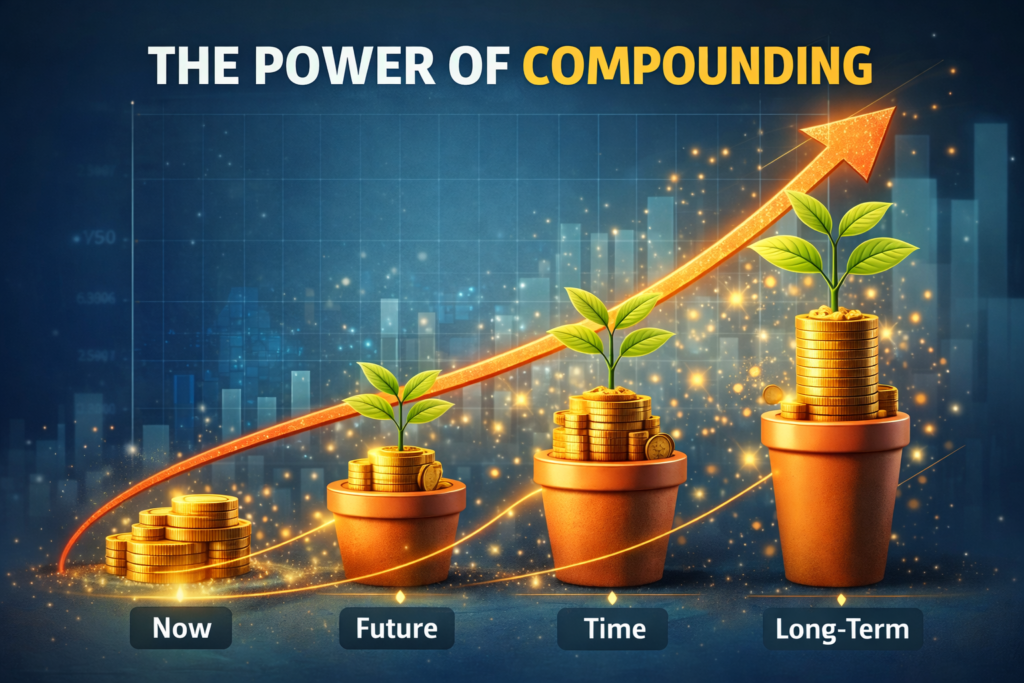
👉 It means earning returns on your returns.
The earlier you start:
- The less you need to invest
- The more wealth you create
Small investments over time can grow into large amounts.
Step 7: Avoid Common Money Mistakes
Many people lose money not because of bad luck, but because of bad decisions.
Avoid these:
- Spending everything you earn
- Investing without understanding
- Following random advice or trends
- Trying to get rich quickly
- Ignoring diversification
👉 Smart investing is slow, steady, and consistent.
Step 8: Follow a Simple Wealth Formula
Remember this:
👉 Earn → Save → Invest → Grow → Repeat
This cycle builds long-term financial stability.
Practical Example (Simple Monthly Plan)
Let’s say you earn a steady income:
- 20% → Investments
- 10% → Savings
- 60% → Living expenses
- 10% → Personal lifestyle
Adjust based on your situation — but always prioritize saving and investing.
Final Thoughts: Money Management Is a Life Skill
You don’t need:
- A finance degree
- A huge salary
- Complex strategies
You need:
- Discipline
- Patience
- Consistency
You can also read our detailed guide on saving money effectively
Conclusion
Managing money is not complicated.
But ignoring it can cost you years of financial struggle.
Start today:
- Track your expenses
- Save regularly
- Invest wisely
Because…
👉 Financial freedom is built step by step, not overnight.
You can learn more about investing basics from Investopedia
Disclaimer
The information provided in this article is for educational and informational purposes only. It is based on personal research, publicly available knowledge, and individual experience in the field of personal finance.
I am not a SEBI-registered investment advisor or financial professional. This content should not be considered as financial, investment, legal, or tax advice.
All investments involve risk, including the possible loss of principal. Readers are advised to conduct their own research or consult with a qualified financial advisor before making any investment decisions.
The author will not be responsible for any financial losses or decisions made based on the information provided in this article.

Amit Singh is an experienced IT professional and passionate blogger with 8+ years in the technology industry. Through Resource Locator, he shares practical finance strategies, productivity tips, and useful technology insights to help readers make smarter everyday decisions.